
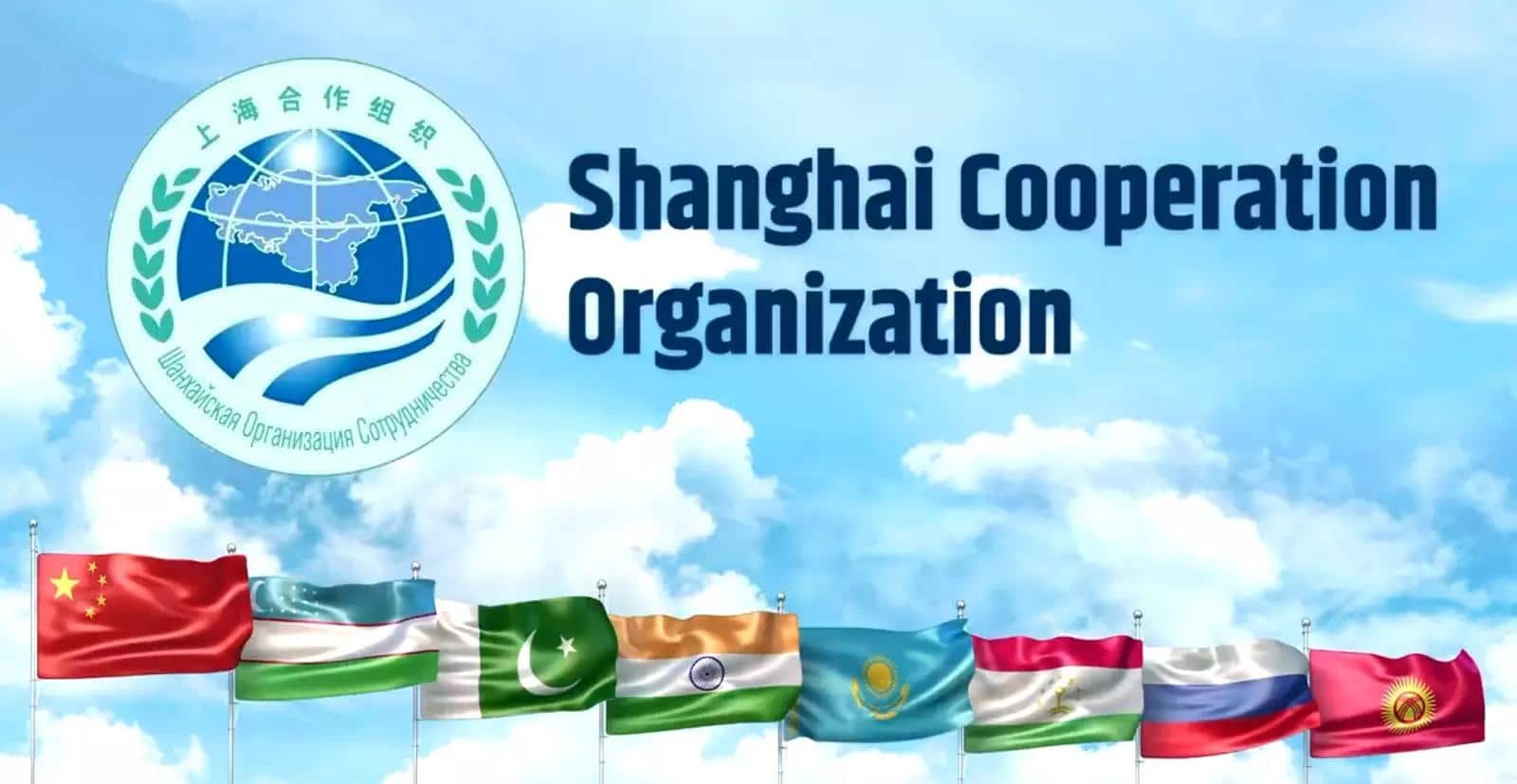
Shanghai Cooperation Organisation
Introduction
The Shanghai Cooperation Organisation (SCO) is a Eurasian political, economic, international security, and defense organization.
Often perceived as a counterweight to Western-led alliances (such as NATO), the SCO focuses heavily on regional security cooperation, counter-terrorism, economic integration, and cultural exchanges across Eurasia.
Origin and Evolution
Phase I: The "Shanghai Five" (1996)
The Genesis: The roots of the SCO trace back to the post-Soviet era. In 1996, five countries—China, Russia, Kazakhstan, Kyrgyzstan, and Tajikistan—formed a grouping known as the "Shanghai Five."
Initial Objective: The mechanism was originally established to resolve border demarcation and demilitarization issues along the former Soviet-Chinese border, build mutual military trust, and ensure regional stability.
Phase II: Institutionalization and Birth of the SCO (2001)
Expansion: In June 2001, during a summit in Shanghai, the leaders of the Shanghai Five, along with Uzbekistan, officially announced the creation of the SCO.
The Charter: The SCO Charter was signed in June 2002 and formally entered into force on September 19, 2003, laying down the legal and institutional framework for the organization.
Phase III: Major Expansion Waves (2017–2024)
South Asian Inclusion (2017): At the Astana Summit in 2017, India and Pakistan were inducted as full permanent members, expanding the organization's footprint into South Asia.
West Asian & Eastern European Additions:
Iran was admitted as a full member at the Samarkand Summit in 2023.
Belarus officially joined as a full member in 2024.
3. Objectives and Core Principles
Core Objectives
Security & Counter-Terrorism: Jointly combating the "three evils"—terrorism, separatism, and extremism.
Economic Cooperation: Promoting trade, investment, energy corridors, and transport infrastructure development among member states.
Regional Stability: Maintaining peace, security, and stability across Eurasia.
Multipolar World Order: Advocating for a democratic, fair, and rational international political and economic system.
The "Shanghai Spirit"
The internal policies of the SCO are governed by the "Shanghai Spirit," which emphasizes:
Mutual trust and mutual benefit
Equality and mutual consultation
Respect for cultural diversity
Desire for common development
Externally, the group adheres strictly to the principles of non-alignment, non-interference in internal affairs, and non-targeting of any third country.
Current Membership Structure
As of recent developments, the SCO consists of 10 Full Member States:
China
Russia
Kazakhstan
Kyrgyzstan
Tajikistan
Uzbekistan
India (Joined in 2017)
Pakistan (Joined in 2017)
Iran (Joined in 2023)
Belarus (Joined in 2024)
Structural Reform of Partners:
Historically, the organization featured separate "Observer States" and "Dialogue Partners." However, the SCO reformed this architecture to consolidate them into a single unified tier called "SCO Partners" (bringing the total partner count to 17, with nations like Laos joining under this framework).
Key Organizational Bodies
Council of Heads of State (CHS): The supreme decision-making body of the SCO, which meets annually to map out the strategic directions and priority areas of cooperation.
Council of Heads of Government (CHG): Focuses on economic cooperation, trade, and approving the organization's annual budget.
The Secretariat: Based in Beijing, China, it serves as the primary executive and administrative organ providing organizational, informational, and analytical support.
Regional Anti-Terrorist Structure (RATS): Headquartered in Tashkent, Uzbekistan, RATS plays a vital operational role in assisting member states in cooperating against terrorism, separatism, and extremism.
Recent Developments & Major Summits
Expansion and Diplomatic Growth: The inclusion of Iran (2023) and Belarus (2024) has stretched the geographical parameters of the SCO from East Asia and Central Asia deep into West Asia and Eastern Europe.
Institutional Rationalization: The structural shift to merge observers and dialogue partners into a unified "SCO Partners" category has streamlined bureaucratic engagement for aspiring countries.
Recent Summits & Declarations: Recent high-level summits (such as the Tianjin Declaration and meetings in Bishkek) have heavily emphasized united fronts against transnational terrorism, cross-border security challenges, and the urgency of establishing secure, localized supply chains and resilient financial mechanisms to bypass Western sanctions.
Cultural and Tourism Integration: The SCO continues to promote tourism and cultural exchanges, establishing designated cultural capitals (such as Varanasi in India during its presidency cycle) to build people-to-people connections across member nations.
Geopolitical Significance and Strategic Challenges
Strategic Importance
Eurasian Connectivity: It acts as a primary diplomatic forum where major Asian and Eurasian powers convene directly, mitigating regional friction points.
Countering Global Hegemony: For countries like Russia and China, the SCO serves as an effective instrument to foster a multipolar world order and dilute unilateral Western dominance in global economic and security governance.
Key Challenges
Internal Geopolitical Rivalries: Bitter bilateral disputes between member states (such as India-Pakistan and historical tensions between China and Central Asian states) often complicate consensus-building.
Economic Realization vs. Rhetoric: Critics often note that despite expansive political rhetoric, practical economic integration and trade implementation within the SCO lag behind tightly knit blocs like the European Union or ASEAN.
Balancing Strategic Autonomy: For nations like India, managing simultaneous strategic partnerships with Western blocs (like the Quad) while navigating an increasingly China-Russia-leaning SCO posture requires careful diplomatic balancing.